
What does "player form" actually mean for a fantasy ranking?
A player is in form when recent innings, recent overs, or recent dismissals tell the same story their career averages do not. For a top-order batter, form tends to look like two or three consecutive scores above 35 with a strike rate inside the venue's par band. For a fast bowler, form looks like a spell pattern that produces edge, seam movement, or wicket-taking balls at a higher rate than the season baseline. The phrase itself is loose, but the inputs that drive it are concrete: balls faced, dot-ball percentage, false-shot percentage, and the share of runs scored in the powerplay, middle, and death phases.
Fantasy rankings absorb that information in a particular way. Career averages, which dominate casual discussion, are slow-moving inputs that smooth out good weeks and bad weeks. Recent form, the last five to ten innings, is a fast-moving input that changes week to week. When the two diverge, the gap is the most useful signal in the data. A batter whose last ten innings are 30 runs above career average is in form, full stop. A bowler whose economy is one run per over below their career mark over the same window is in form. Rankings that weigh recent form more heavily than career numbers tend to flag those players earlier, which is why live ranking tables on the Come Sports player rankings can move several positions inside a single week during a heavy fixture window.
For fantasy players the practical read is short. Form is most useful when the venue, the opposition, and the role inside the team are stable. It is least useful when any of those three changes. A batter in form at a flat Wankhede track who then travels to a green-top Eden Gardens strip has to re-prove the form against a new ball, a new pitch, and a new attack. Captain picks built on the form read should always carry a venue check.
How injuries change a fantasy ranking inside 24 hours
Injuries move faster than form because the information is binary. A bowler who took a five-for on Tuesday can be ruled out of the XI on Wednesday with a side strain, and the fantasy ranking system has to absorb that change before the next fixture locks. The fastest rankings, those updated by match-by-match, treat injury as a forced substitution. The slower ones, those updated only at the end of a series, treat injury as a non-event until the next data point arrives. The difference between those two ranking styles is the difference between a captain pick that catches the replacement and one that misses the window.
Three injury patterns dominate India and IPL fantasy discourse. Acute match injuries, the hamstring pulls and the finger dislocations, are reported quickly and produce a same-day replacement. Workload injuries, the kind that build across a long IPL season and surface in the back end of the tournament, are reported with a delay because the player often plays through them first. Recurrence injuries, particularly for fast bowlers with a history of stress fractures, surface in clusters because the workload behind them is shared across formats. Reading injury news well means knowing which of those three patterns the report fits, because the ranking impact is different for each.
The captain pick adjustment for an injury is not just a swap. If a frontline strike bowler is ruled out, the replacement is usually a wicket-taking bowler, but a wicket-taking bowler with a lower batting position. The captain pick should be rebalanced toward a batter in the same XI, not a like-for-like bowler replacement, because the replacement's floor is lower than the original's ceiling. That rebalancing is where the real ranking movement happens, and it is where casual fantasy players lose ground.
Why selection news is the most overrated input
Selection news is the announcement layer that sits above form and injury. When a national selector names a squad, the names on the list tell you who is in the conversation. They do not tell you who is in the XI, and they do not tell you what role a player will be asked to perform. A player added to an India ODI squad as a batting all-rounder is a different fantasy asset from the same player added as a seam-bowling all-rounder, but a press release will rarely specify which framing the team management has in mind. Selection news is therefore most useful when paired with two follow-up questions: what role, and what number in the batting order.
The BCCI selection cycle, the IPL auction cycle, and the domestic season selection cycle each generate a different ranking effect. BCCI squad announcements create immediate ranking movement for fringe players, often for a single series, because the player pool for an India cap is small and a single cap can move a fantasy ranking by double-digit positions. IPL auction outcomes are a slower signal because the player moves to a franchise that has to find a role for them; until that role is visible in match play, the ranking move is mostly speculative. Domestic selection, Ranji Trophy squads for instance, is the slowest signal of the three, and most often relevant to younger players whose fantasy value is still being established.
For fantasy players the practical read is to use selection news to widen the watchlist, not to lock the captain pick. A player added to a squad who then plays three first-class innings before the white-ball series begins is a more reliable captain pick than the same player added on the morning of the announcement. The information density of selection news is highest at the squad level, drops sharply at the playing XI level, and collapses once the player takes the field. The ranking systems that handle that gradient well produce the cleanest captain picks; the ones that treat all three signals as equal end up overrating the press conference and underrating the warm-up knock.
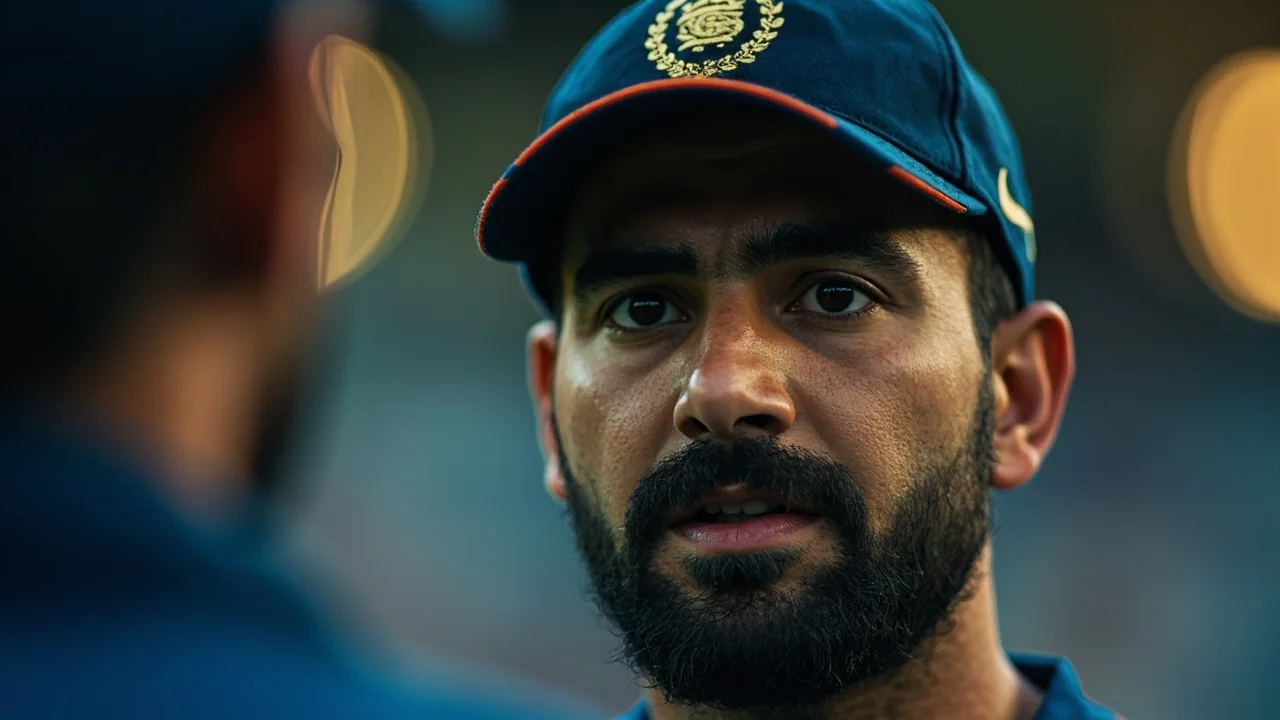
Milestones as a ranking signal, and the trap of chasing them
Milestones, the 10,000th ODI run, the 300th Test wicket, the 100th T20I cap, are easy to talk about and hard to use. They are not predictive: a batter one run short of 10,000 is not statistically more likely to score in the next innings than a batter one run short of 9,999. What milestones do change is media exposure, which changes captain pick density in casual fantasy pools, which changes the order in which teams are picked on platforms that show pick-rate percentages.
The trap is treating milestones as a captain pick signal on their own. They are not. They are a secondary signal that becomes useful only when combined with a form read and a venue read. A batter approaching 10,000 ODI runs in form on a flat home track against a weak attack is a premium captain pick. The same batter out of form, away from home, against a strong new-ball pair, is a captain pick only for milestone narrative reasons, and that is rarely a winning combination. The clean read is to let milestones tilt an otherwise tight captain pick call, not to drive it.
For career context, milestones serve a different function. They tell a reader where a player sits in the historical record, which is useful for framing analysis and useful for distinguishing two players with similar career averages. A batter averaging 48 with 12,000 ODI runs is a different asset from a batter averaging 48 with 1,800 ODI runs. Both belong in the captain pick conversation; the former is a more reliable floor, the latter is a higher ceiling with more variance. Fantasy rankings that surface the milestone context without letting it dominate the captain pick output are the ones that feel stable across formats.
How the three forces interact during a heavy India window
The interesting ranking movement happens at the seams, when form, injury, and selection overlap inside a single fixture window. A Test series in Australia, a home ODI series against Sri Lanka, and an IPL phase window can all run in the same fortnight, and a player involved in two of those three tournaments is exposed to information from all three forces at once. The ranking systems that handle overlap well are explicit about which tournament they are tracking. A Test-only ranking built on a player's white-ball recent form is the most common form of ranking error, and it produces captain picks that look defensible on paper and lose in practice.
The way to read overlap is to separate the three forces by tournament. A batter in form in red-ball cricket but unselected for the upcoming ODI series is not a captain pick for the ODIs, no matter what the Test form says. A bowler coming back from injury in time for the IPL is a captain pick in the IPL only if the role inside the franchise is settled; if the bowler has to fight for a place in the XI, the ranking is still speculative. The cleanest ranking systems make those boundaries visible in the data table, often as a separate column or a separate fixture-window filter, and they are the systems worth following.
For fantasy players, the practical read on overlap is to lock the captain pick to the tournament and the role, not the player name. A captain pick on a player in form in red-ball cricket who is not in the ODI squad is a wasted pick. The same player available in the IPL auction three weeks later is a fresh captain pick, with fresh inputs. Carrying the name across tournaments is the most common error in casual fantasy play, and it is the one that ranking systems built around tournament boundaries are designed to prevent.

What a captain pick read actually needs to be reliable
Three inputs are non-negotiable for a captain pick on a high-stakes contest. The first is a verified role inside the playing XI. The second is a venue read, the par score at the ground, the chase record, the dew factor, and the boundary length. The third is a form read on the specific opposition, not a generic recent form number. Without those three, a captain pick is a coin flip. With them, a captain pick is a defensible decision, and that is the standard every serious fantasy player tries to hit.
The standard misses that fantasy players should watch for are predictable. Captain picks on a player whose role is "all formats" without a specific role for the fixture are weak. Captain picks on a venue read based on overall tournament averages rather than the specific ground are weak. Captain picks on form read against a different opposition to the one being played are weak. None of those reads is wrong on its own; the weakness is the combination. The reliable captain pick is the one where every input points in the same direction.
Beyond those three, two more inputs are useful but not essential. A captain pick read benefits from a recent ball-by-ball note, what the batter did in the last powerplay, what the bowler did in the last death over. It also benefits from a contract read, whether the player is in a contract year, whether the franchise is settled, whether the player is fighting for a place. Those inputs rarely decide a captain pick, but they are useful tiebreakers when the three primary inputs are equal. The captain pick is rarely decided by the headline; it is decided by the combination.
Why milestones, ranking movement, and selection talk rarely move at the same speed
Each of the three forces has its own clock. Milestone talk moves at the speed of media cycles, which are often slower than the cricket itself. A 10,000th run can be on the front page for two days even when the next Test is a week away. Form moves at the speed of innings, which is faster, but a single low score does not undo a streak. Injuries move at the speed of medical bulletins, which can be same-day for acute injuries and weeks-long for workload injuries. Selection news moves at the speed of press conferences, which are pre-scheduled and rarely reflect the latest form or fitness state of the player.
For a fantasy player, the practical read on the three clocks is to weight them differently depending on the fixture window. In a quiet week between two Test matches, selection news dominates because there is no form data and no injury data to compete with it. In a busy week with three ODIs and a T20I, form data dominates because the data is fresh and the selection news is stale. In a week where an injury is announced mid-series, the injury dominates because the binary nature of the information overrides every other signal. The cleanest fantasy rankings build a clock-weighting rule like this into their update logic. The cleanest fantasy players apply the same rule by hand.
The implication for ranking tables is that no single column tells the whole story. A form column is necessary but incomplete without a role column. A role column is necessary but incomplete without a venue column. A venue column is necessary but incomplete without a recent-injury flag. The rankings that combine all four, with a clear hierarchy about which overrides which, are the rankings that survive a heavy fixture window without making obvious errors. The rankings that lean on a single column, however well-calculated, will move sharply when a different column takes over the news cycle. That is the kind of volatility casual players should look out for, and the kind of input mix serious players should aim to replicate.
How to read a ranking table for a new fantasy player
For a reader using a ranking table for the first time, the most useful first check is the date stamp. A ranking table that has not been updated inside the last 48 hours is a historical table, not a current one, and the captain pick it suggests has to be re-checked against the latest news. The second check is the source of the data. Rankings built on ball-by-ball data, with overs, dot balls, and phase splits surfaced in the underlying table, are more reliable than rankings built on summary data with only runs and wickets shown. The third check is whether the table separates formats. A Test ranking and an ODI ranking are not the same ranking, and a table that mixes them produces misleading captain picks.
The practical workflow for a new reader is short. Open the table, check the date stamp, check the data source, check the format split. Pick the relevant format. Scan the top twenty names. Cross-check three to five names against the latest selection news, the latest injury update, and the venue read for the next fixture. Adjust the captain pick shortlist accordingly. That workflow takes five to ten minutes, which is the same time it takes a casual reader to pick a fantasy team without the workflow. The difference is in the captain pick, and the captain pick is where the contest is won or lost.
The honest acknowledgement is that even with a clean workflow, the captain pick loses more often than it wins. A 60 percent captain pick win rate is a strong read; 65 percent is elite; anything above 70 percent is a tournament outlier, not a sustainable standard. The right read on a ranking table is to treat it as a probability distribution, not a certainty, and to build a fantasy team whose captain pick carries the highest probability of returning a top-half finish in a contest. The 60 to 70 percent window is where the work pays off, and it is where the three forces, form, injury, and selection, are the most useful inputs.
What the next ranking shift is likely to track
Looking forward, the three forces that move fantasy rankings are the same three that have always moved them, but the data behind them is changing. Ball-by-ball data is now available inside hours of a match, not days. Injury reports now travel through franchise social media and BCCI press releases faster than they used to, which compresses the ranking adjustment window. Selection announcements still move at the speed of press conferences, but the commentary around them is faster, which means the interpretation of a selection call can outrun the actual data. The ranking systems that survive this faster cycle are the ones that prioritise verifiable data over commentary.
The next ranking shift to watch is the compression of the form window. Career averages and last-ten-innings averages are already the standard; last-five-innings averages are starting to surface in the more advanced tables, and they will become the default once the data is reliable. When that shift lands, captain picks built on the last five innings will replace captain picks built on the last ten, and the players who are in extreme form either way will move more sharply in the table. That will make the ranking table more sensitive, which will make the captain pick more sensitive, which will make the difference between a serious and a casual fantasy player a little larger than it is today.
The same shift will hit the injury and selection columns. Injury data is going to move from text bulletins to structured feeds, which will allow ranking systems to update automatically. Selection data is going to move from press-conference transcripts to squad-list data published on BCCI and franchise channels, which will allow ranking systems to filter by confirmed squad status. Both shifts will tighten the window between information and ranking update, and both will reward fantasy players who read the structured data first. The casual reader who relies on commentary will fall further behind. That is the trajectory of the next ranking cycle, and it is the trajectory worth tracking for any fantasy player serious about the captain pick.
What a careful reader should take from this
Form, injury, and selection are the three forces that move a fantasy ranking, and the rest of the noise, milestone talk, media cycles, and contract chatter, sits on top of them. A reliable captain pick is built on the three primary forces plus a venue read. A reliable ranking table is one that surfaces all three forces explicitly and weights them by tournament. A reliable workflow is short, it checks the date stamp, the data source, the format split, and the latest selection and injury update, and it locks the captain pick inside ten minutes.
The single most important practical implication is that the captain pick should be locked to the tournament, not to the player. A batter in red-ball form is not an ODI captain pick. A bowler coming back from injury is not yet an IPL captain pick until the franchise role is settled. Carrying the player name across tournaments is the most common error in casual fantasy play, and the ranking systems built around tournament boundaries are designed to prevent that error.
The single most honest limitation is that this explainer is a durable, evergreen read, not a live captain pick. Form, injury, and selection change week to week, and the captain pick that follows from them has to be rebuilt every fixture. What the explainer above can offer is the framework for reading those three forces, and the discipline of applying them in the right order. The framework stays the same; the inputs change. That is the structure of fantasy rankings in India, and it is the structure worth tracking.
Build a team around the next fixture
Pick your captain from the latest player rankings, then enter the Rs 1 contest for the next match. 2-minute withdrawals, no deposit required to start.